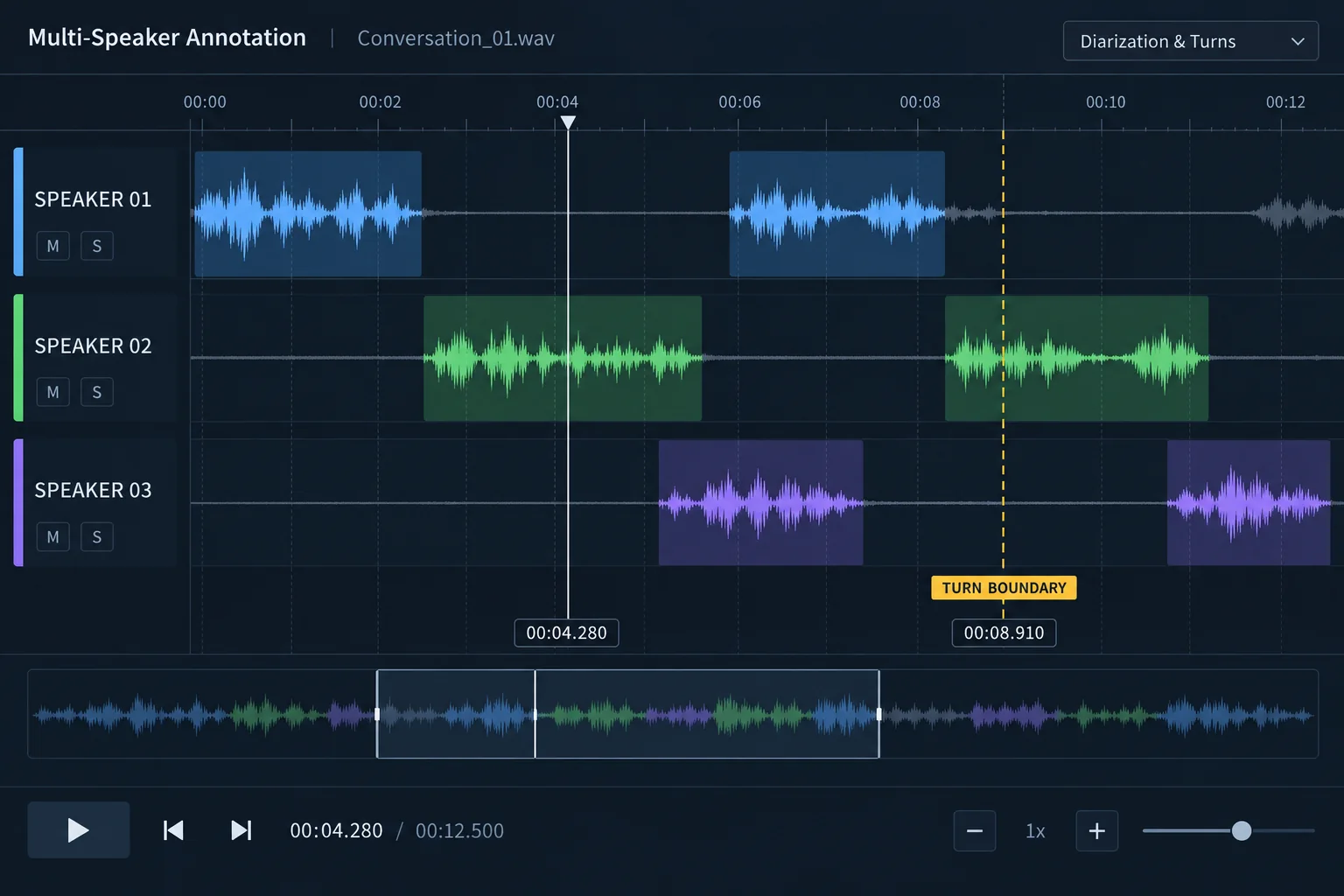
Speaker Diarization & Turn Segmentation
Millisecond-accurate boundary segmentation determining "who spoke when" across continuous multi-party recordings, assigning persistent speaker identities, turn timestamps, and speaker transition points.
Multi-speaker audio becomes useful only when models can distinguish who is speaking, when they speak, where turns overlap, and what non-speech events occur around them. Josisoft builds diarization and acoustic-tagging workflows around your speaker rules, overlap policy, event taxonomy, channel structure, and QA criteria so each recording is converted into precise temporal labels for speech and audio models.
Talk to a Data SpecialistMillisecond-accurate boundary segmentation determining "who spoke when" across continuous multi-party recordings, assigning persistent speaker identities, turn timestamps, and speaker transition points.
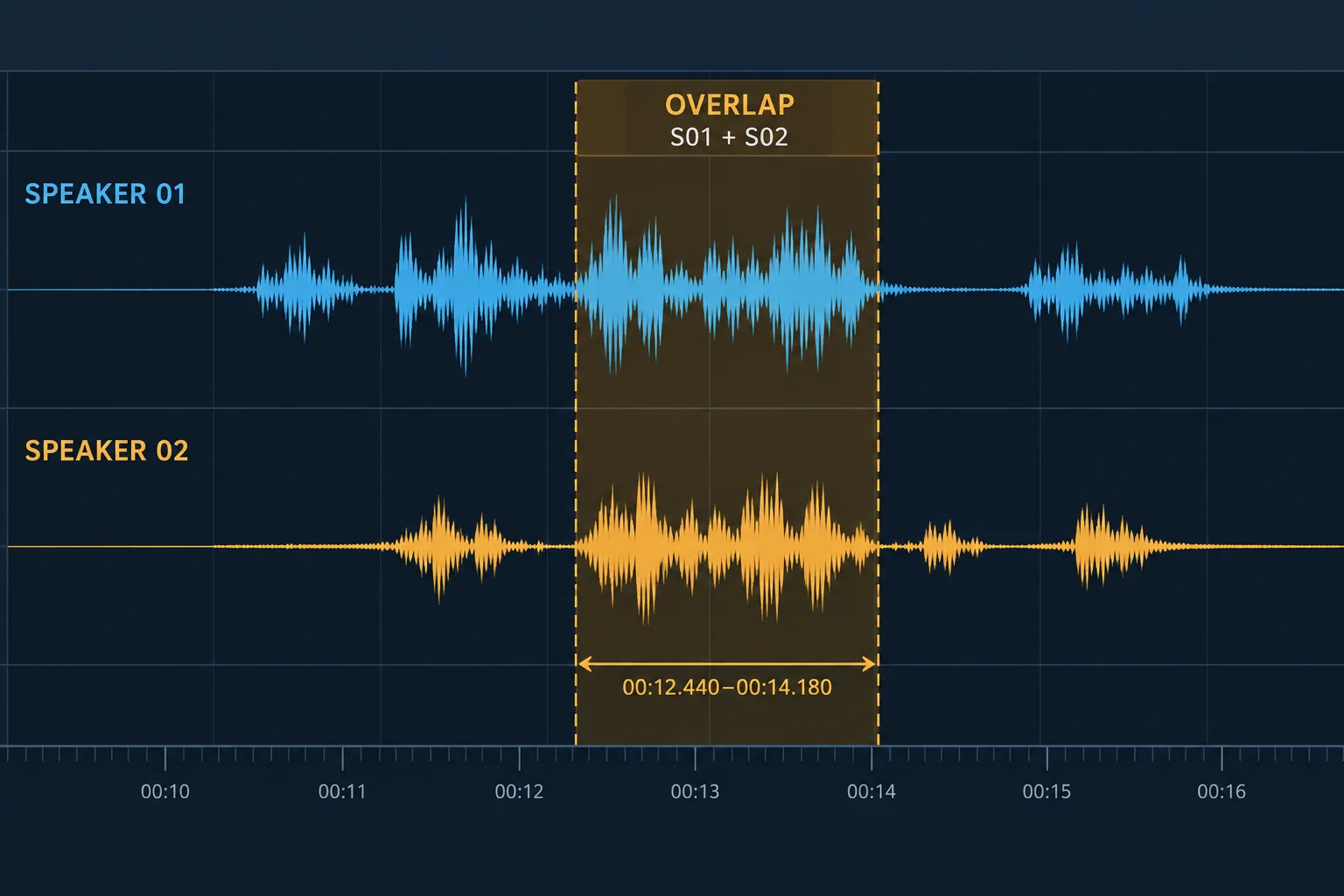
Precise start-to-end temporal boundary isolation for simultaneous cross-talk and overlapping speech, attributing concurrent vocal segments to their respective individual speaker tracks.
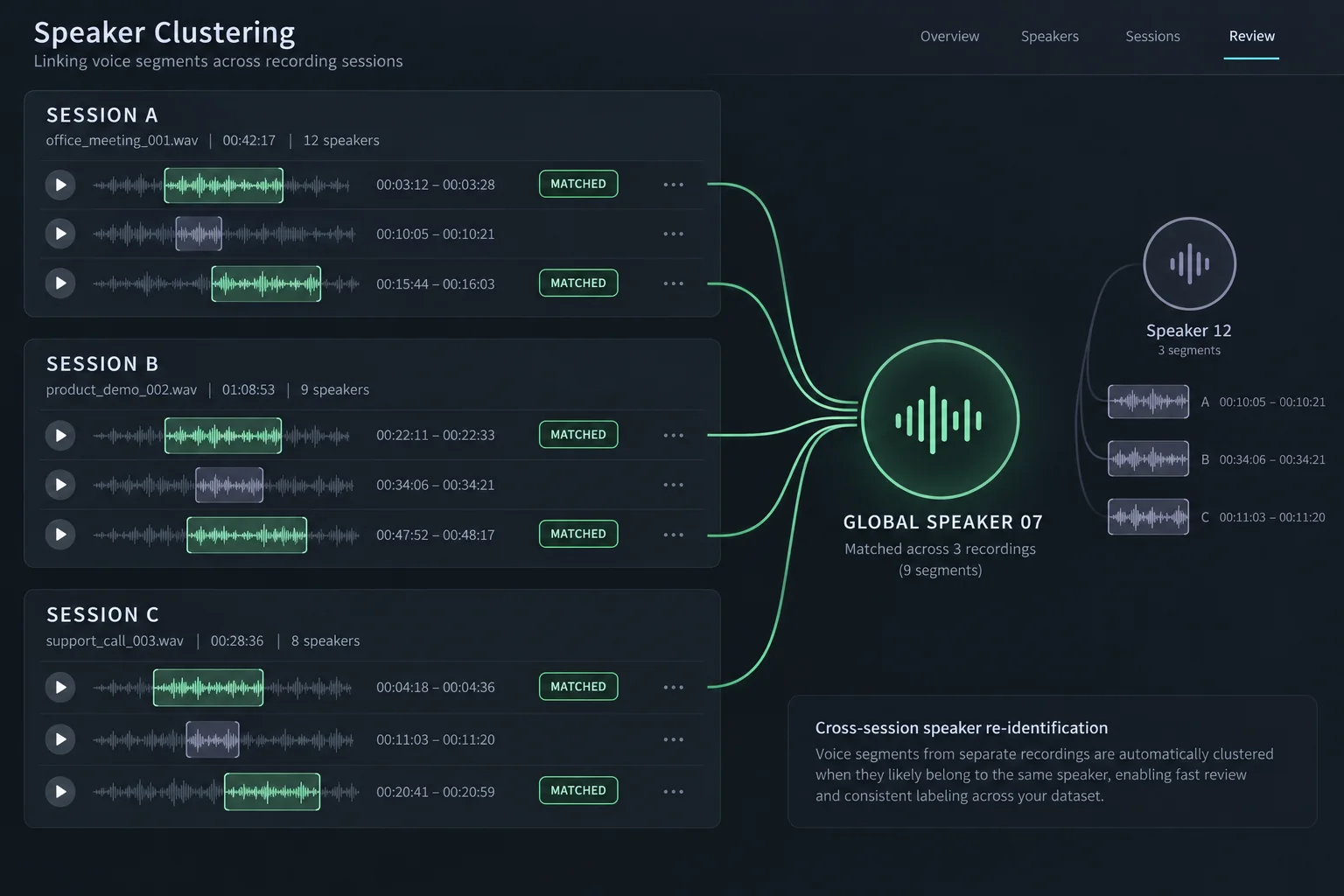
Global speaker association and unsupervised clustering tracking the same speaker identity across multiple disjointed audio files, recording sessions, and long-term call archives without prior voice enrollment.
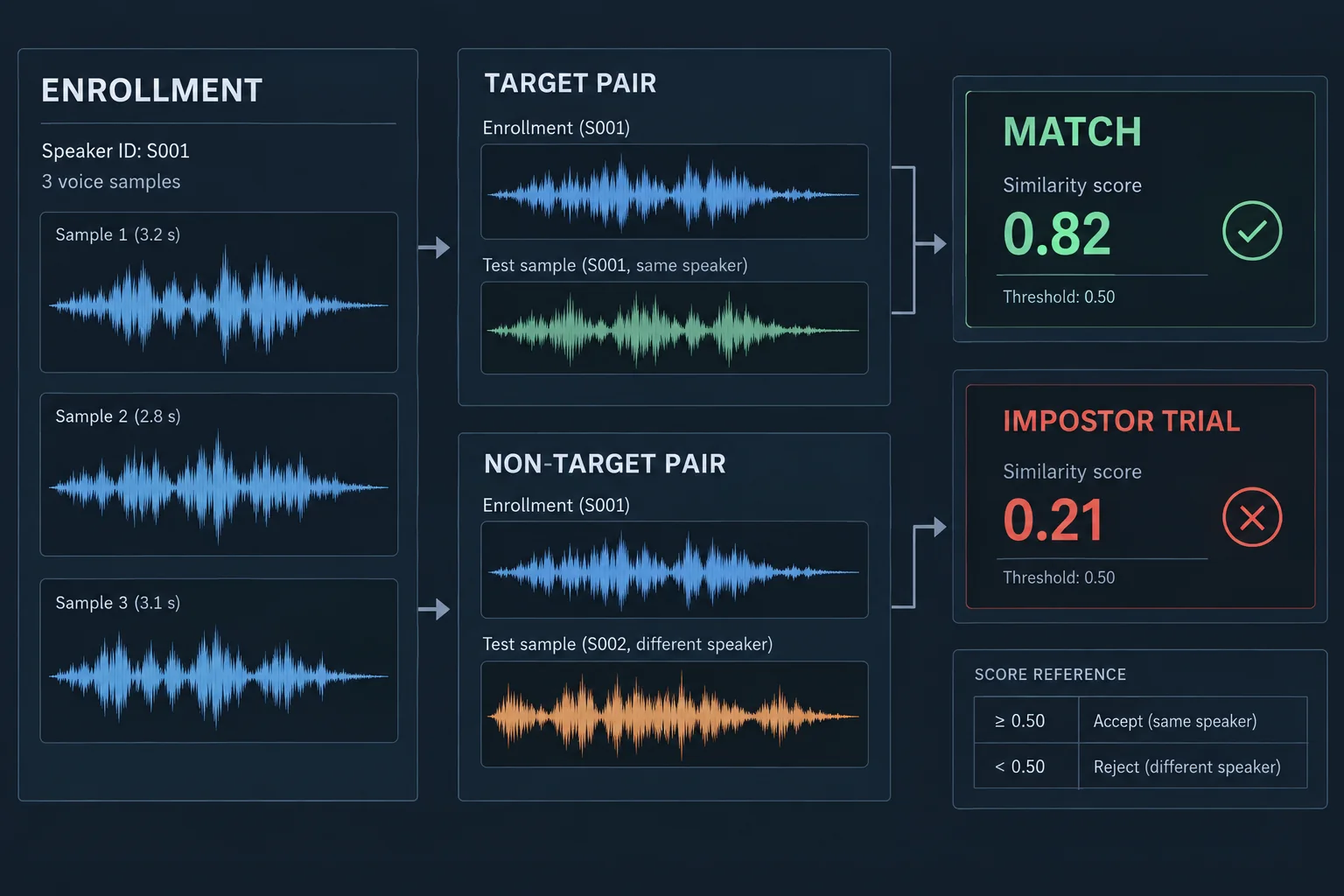
Construction of target and non-target voice verification pairs, enrollment audio curation, and impostor trial datasets for training 1:1 speaker verification and 1:N biometric identification models.
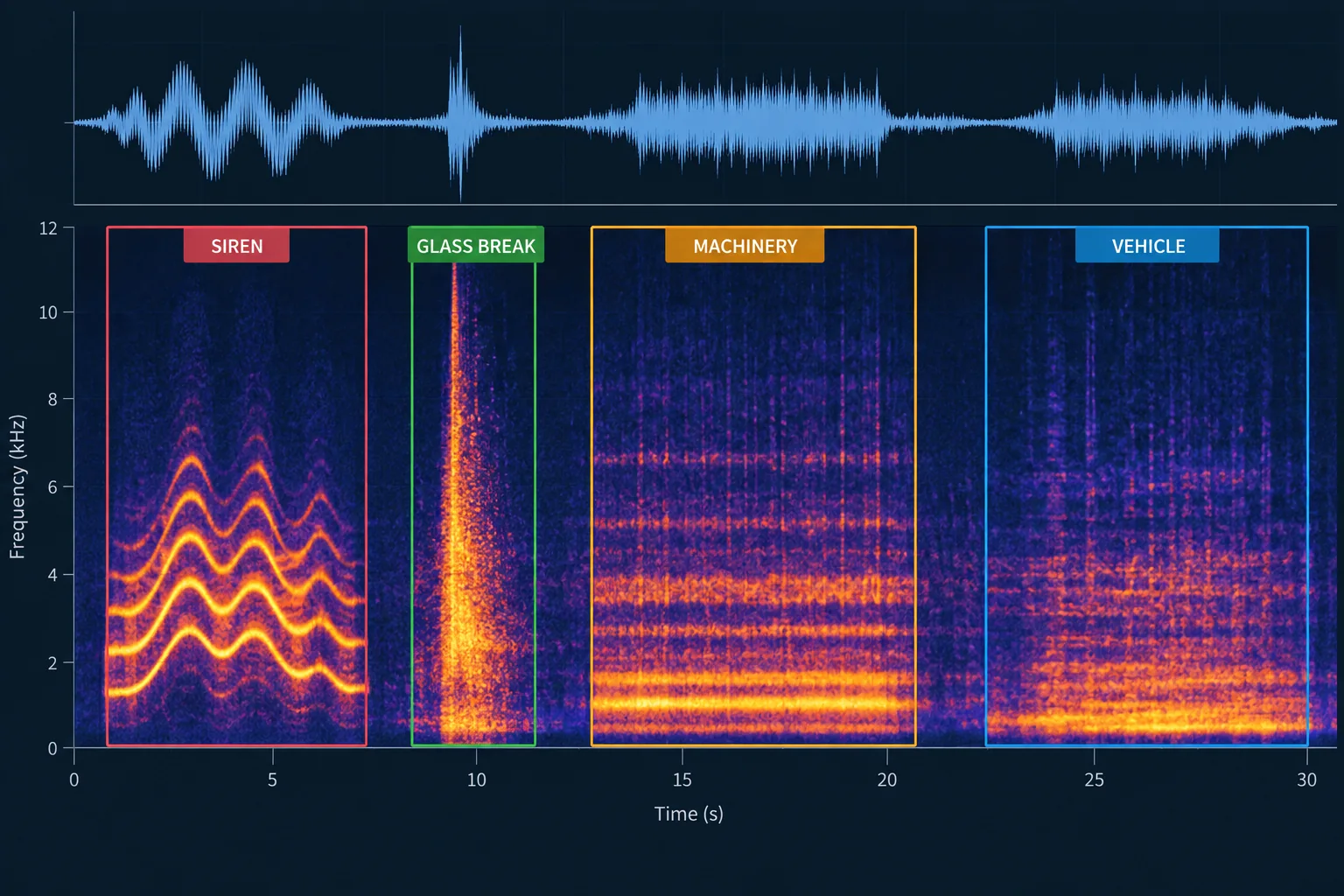
Temporal localization and categorical tagging of transient and continuous environmental sounds—including sirens, alarms, glass breaks, animal vocalizations, industrial machinery, and vehicle noise.
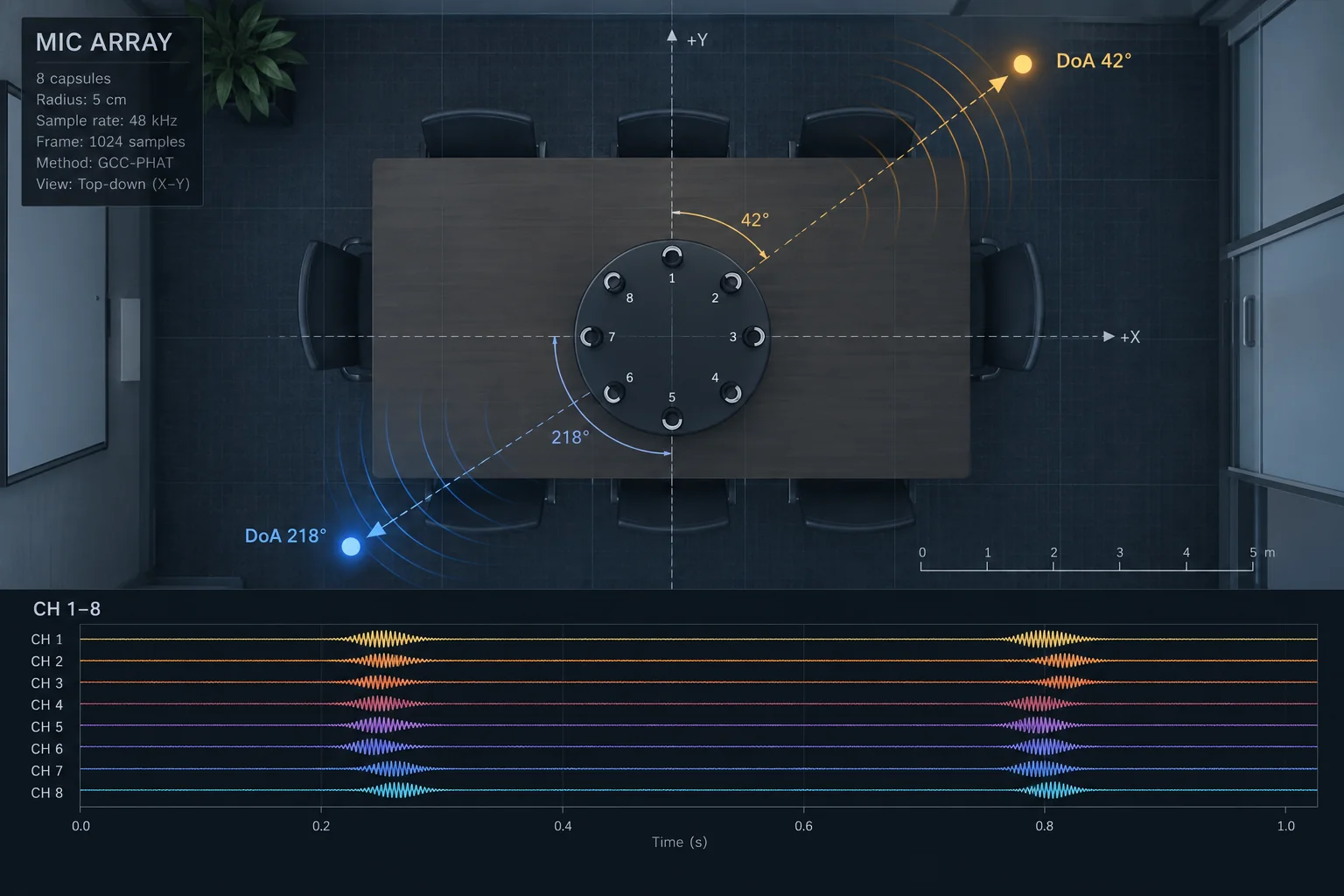
Direction of Arrival (DoA) estimation and spatial coordinate annotation across multi-channel microphone arrays and Ambisonic audio formats for smart assistants, spatial audio, and robotics.
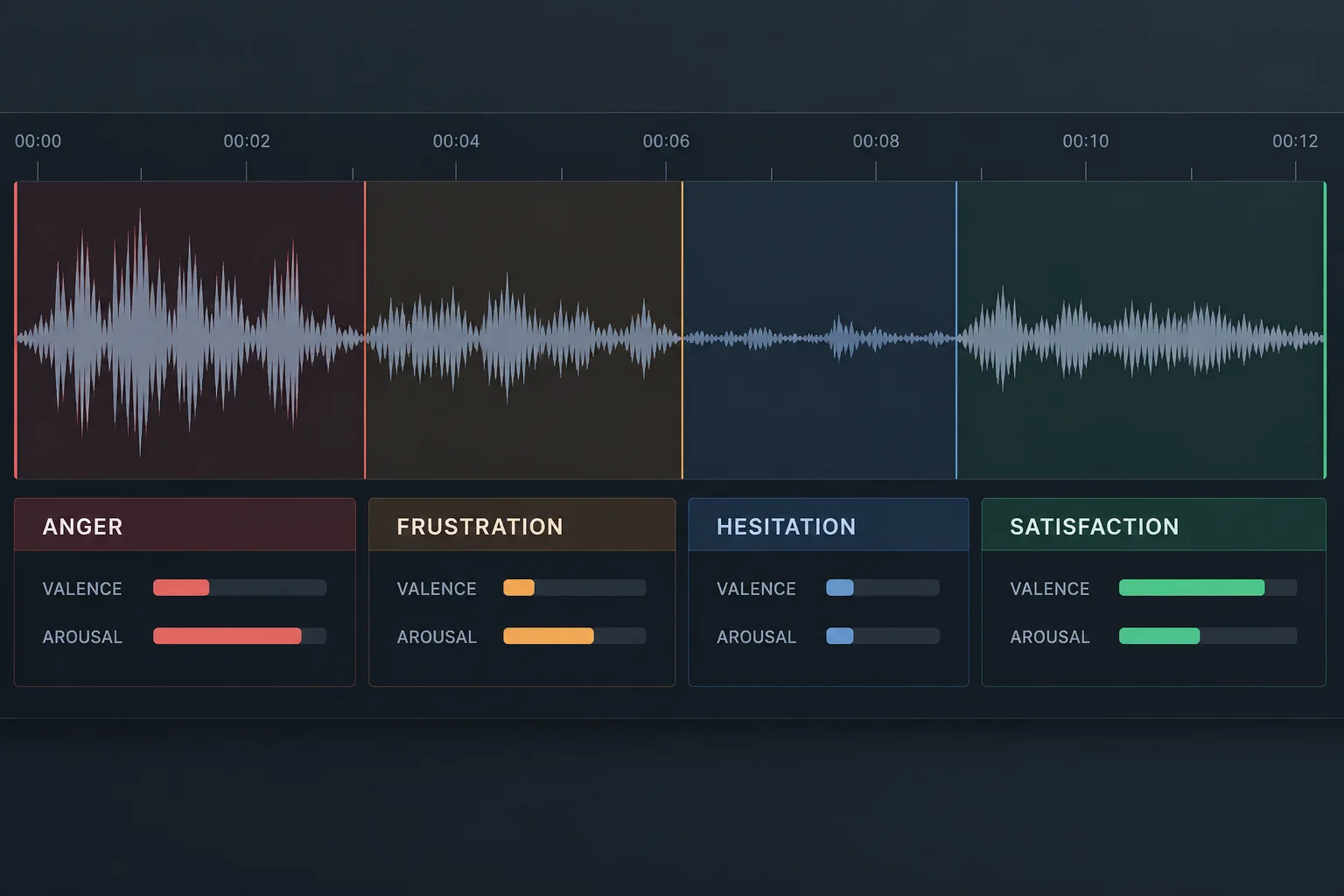
Utterance-level and segment-level labeling of emotional states, valence, arousal, and vocal sentiment (e.g., anger, frustration, hesitation, satisfaction) derived strictly from acoustic vocal cues.
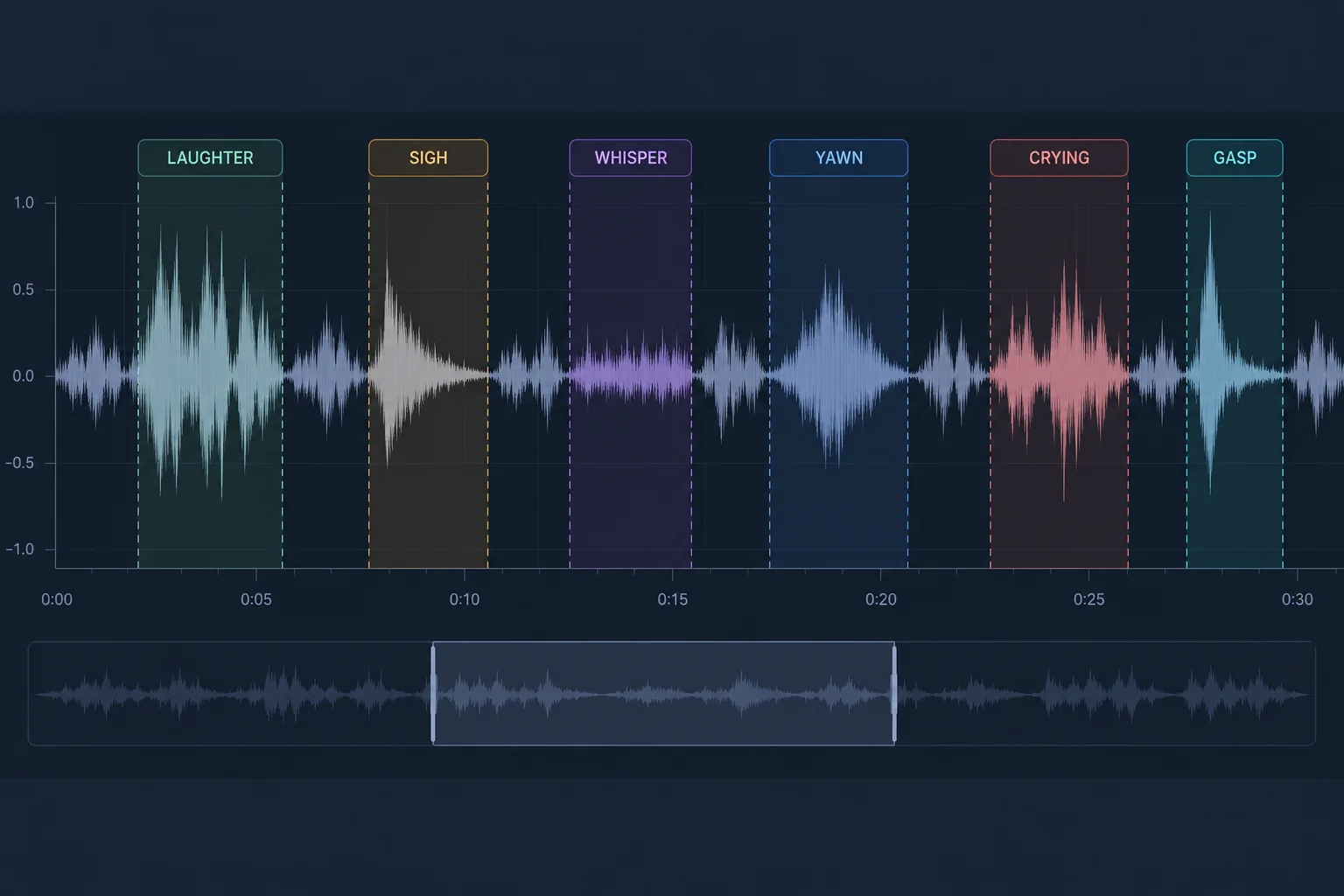
Time-aligned annotation of physiological and expressive non-verbal sounds—including whispers, sighs, yawns, laughter, crying, gasps, and dysarthric speech patterns—for natural conversational AI.
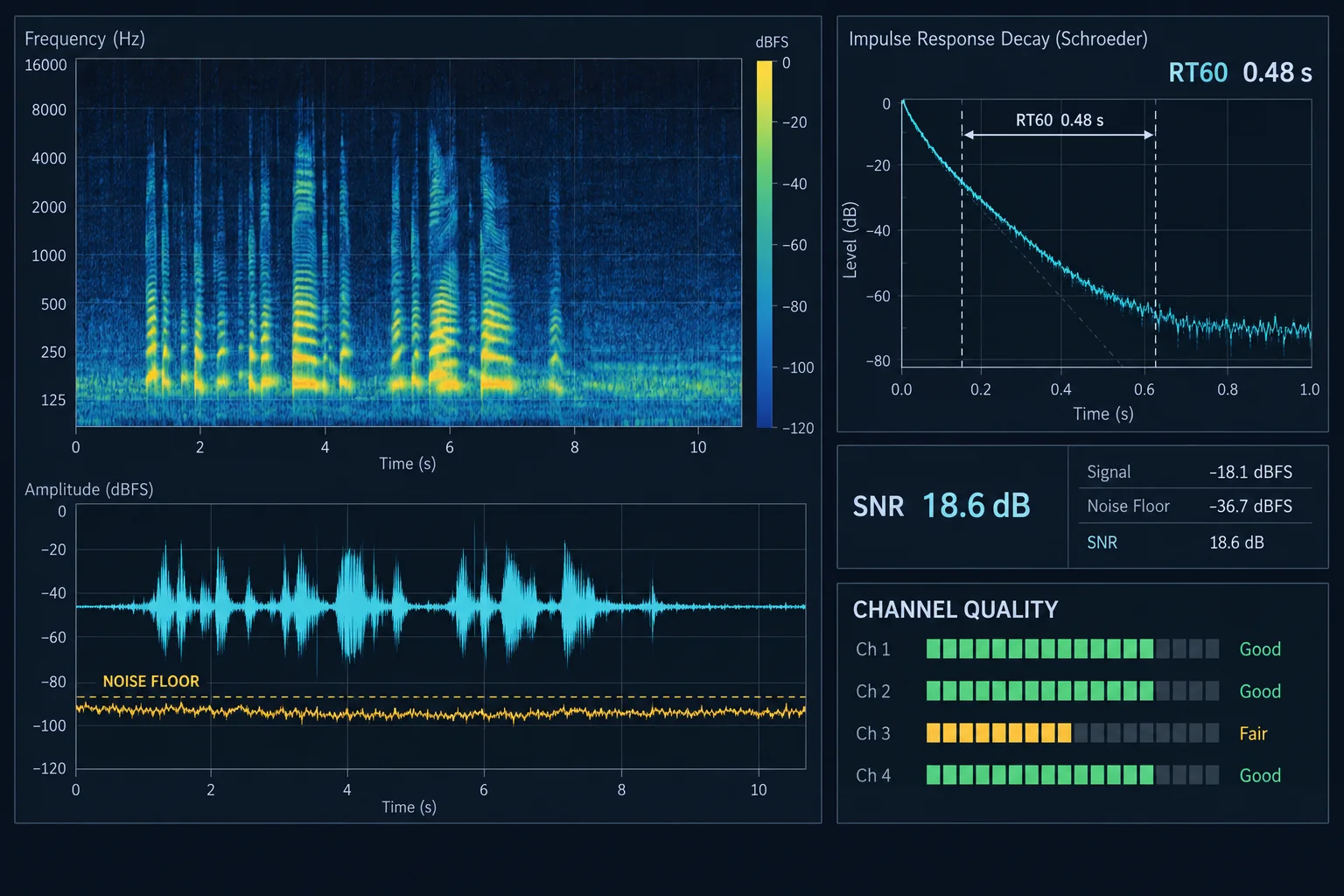
Characterization of background acoustic conditions, room reverberation levels (RT60), Signal-to-Noise Ratio (SNR) grading, and recording channel degradation for speech enhancement algorithms.
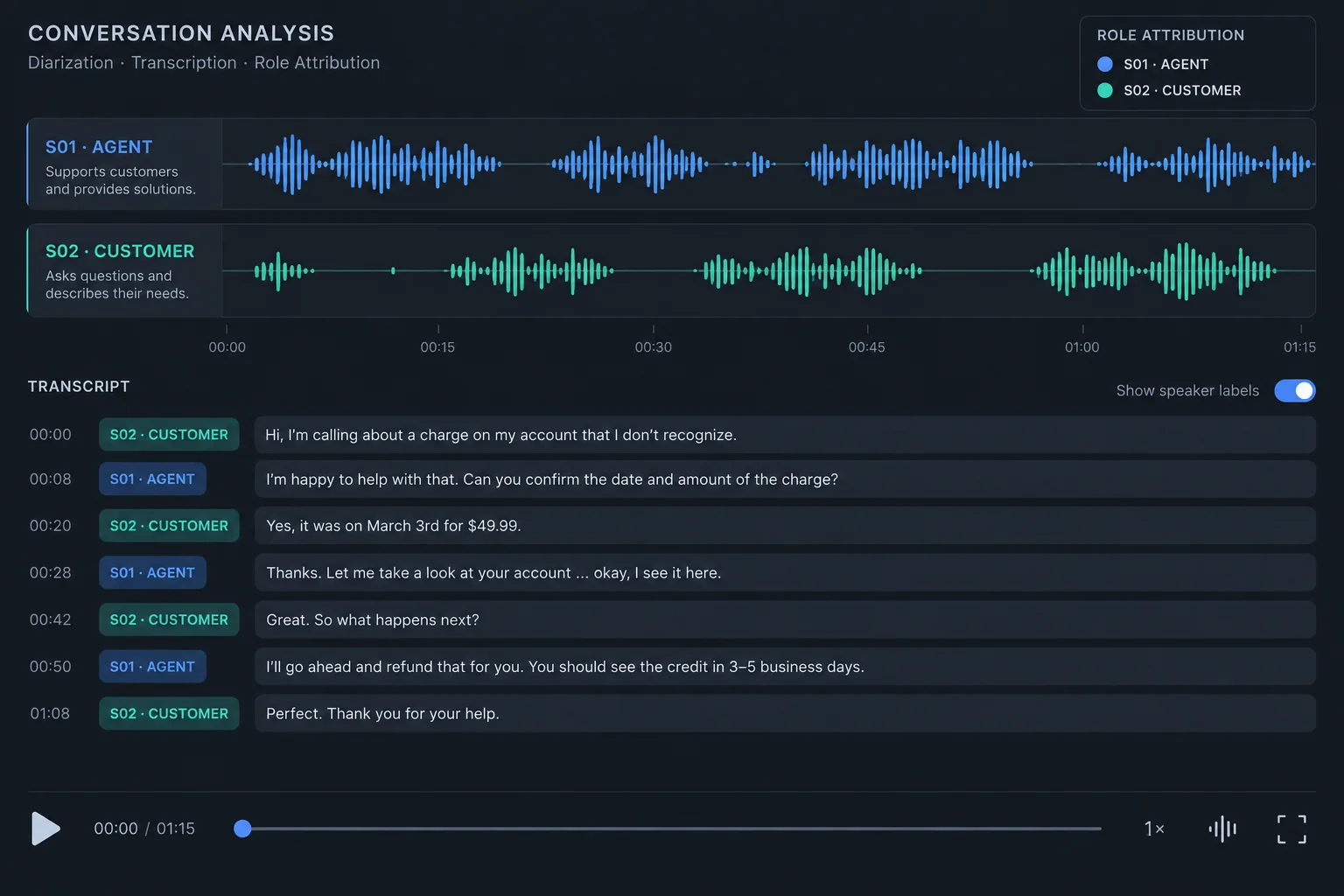
Semantic role mapping assigning functional attributes (e.g., agent vs. customer, doctor vs. patient, interviewer vs. respondent, instructor vs. student) to diarized speaker tracks for conversational intelligence.
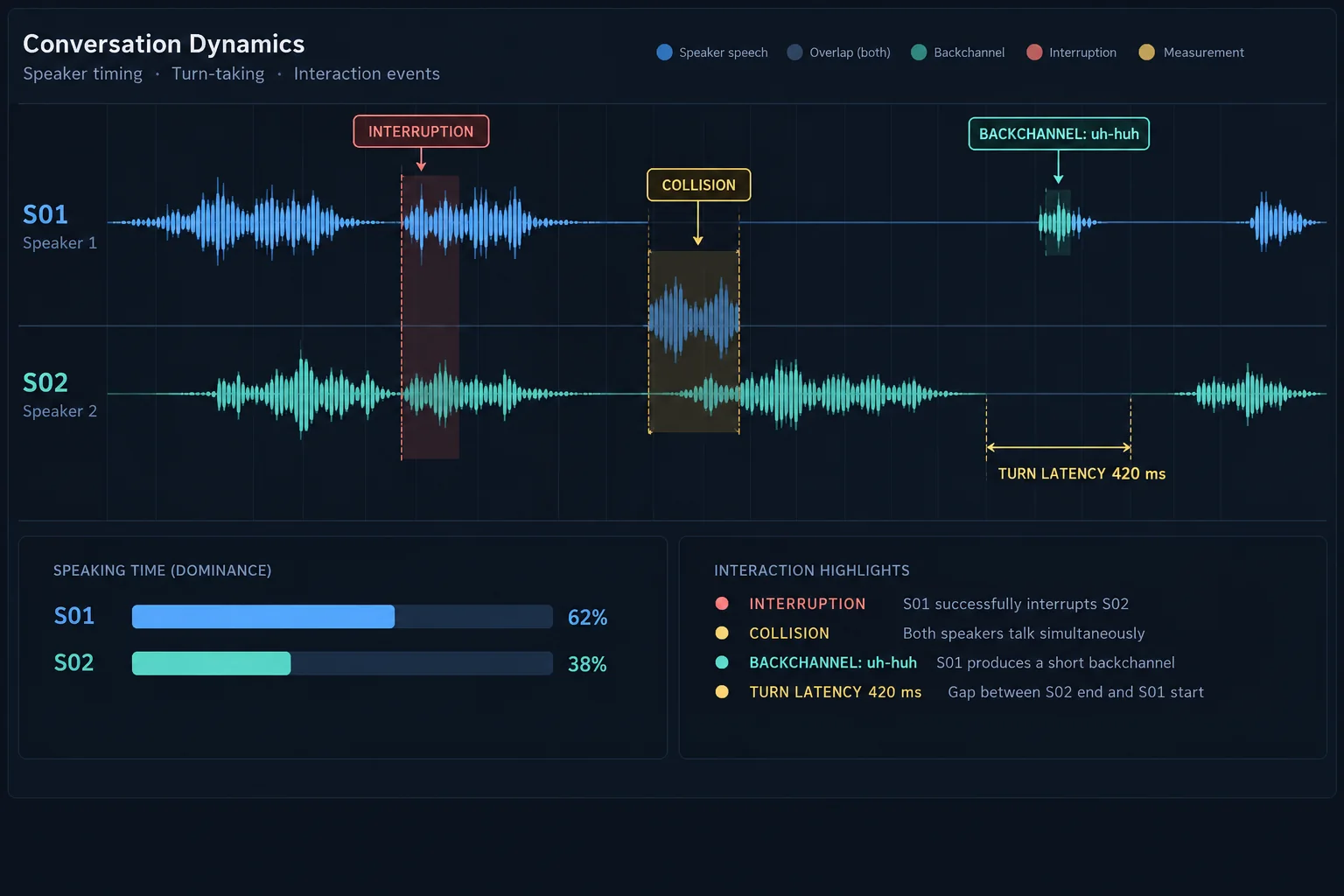
Temporal logging of dialogue interaction patterns, including successful interruptions, speech collisions, backchannel affirmations ("uh-huh", "right"), conversational dominance, and inter-turn latency.
Our teams can work inside client-approved speech annotation environments supporting waveform segmentation, speaker lanes, overlapping speech, timestamps, event labels, and multi-channel audio, including Label Studio, SuperAnnotate, and other approved systems.
Annotators can work within client-owned audio platforms through approved secure access, following your speaker-ID rules, overlap policy, acoustic-event taxonomy, channel conventions, keyboard workflow, and review stages.
When no production annotation platform is available, we can configure controlled project workspaces around your audio format, diarization schema, speaker conventions, acoustic-event labels, permissions, and QA stages for pilot and scaled delivery.
Label speaker turns, agent/customer roles, interruptions, overlap, silence, and non-speech events across customer-service recordings and support conversations.
Separate and track speakers across meetings, research interviews, focus groups, panel discussions, and collaborative recordings.
Annotate hosts, guests, multiple voices, music, applause, background audio, and speech overlap in podcasts, recorded programs, interviews, and broadcast content.
Prepare speaker-separated and event-tagged audio for speech research, audio understanding, sound classification, diarization, and multimodal training datasets.
Every annotator, QA reviewer, and project manager signs an NDA before accessing project assets.
Personnel are trained on data confidentiality: strict restrictions on screen sharing, zero tolerance for screen recording or screenshots, and supervised session management.
On-premise operations at our central Durgapur facility enforce controlled local networks, restricted USB and removable media ports, and supervised work environments.
Each client is assigned a dedicated team working in siloed environments, preventing cross-project data contamination and maintaining domain context.
Share a representative audio sample, speaker conventions, overlap policy, acoustic-event taxonomy, channel structure, and QA criteria with our delivery team. We will calibrate the annotation rules, complete a controlled pilot batch, review difficult speaker transitions and acoustic edge cases, and return the sample for acceptance before production scaling.