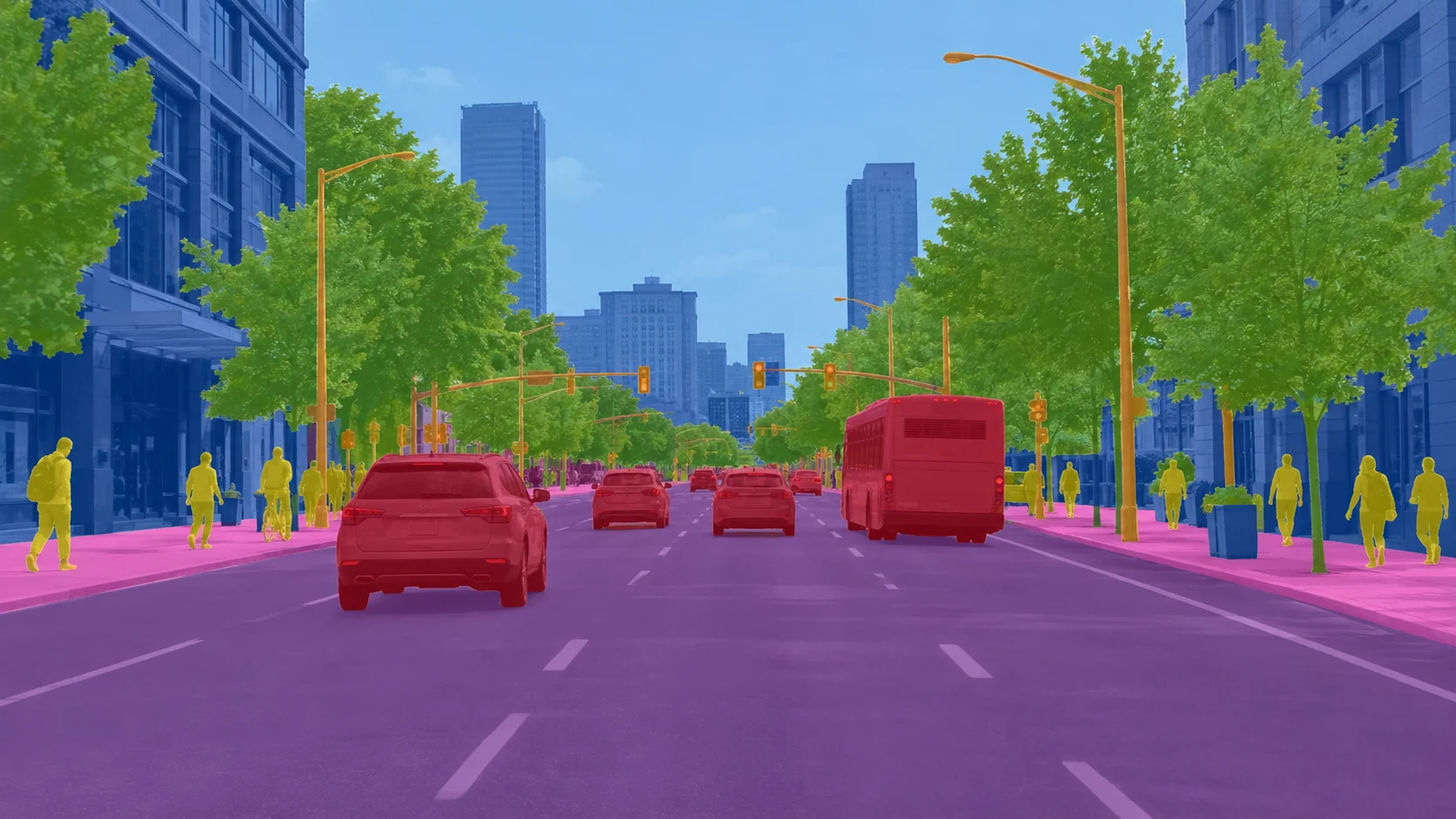
Semantic Segmentation
Dense, pixel-level classification assigning every pixel in an image to a predefined environmental or structural class (e.g., drivable surface, sidewalk, sky, vegetation, and infrastructure) with uniform class boundaries.
Detection tells a model where an object is. Segmentation defines exactly which pixels belong to it. Josisoft builds calibrated semantic and instance segmentation workflows around your taxonomy, boundary rules, occlusion policy, and edge-case definitions. Our domain-trained annotation pods trace complex scenes at pixel level and validate every batch through structured QA, giving vision teams clean masks that remain consistent from pilot through production.
Talk to a Data SpecialistDense, pixel-level classification assigning every pixel in an image to a predefined environmental or structural class (e.g., drivable surface, sidewalk, sky, vegetation, and infrastructure) with uniform class boundaries.
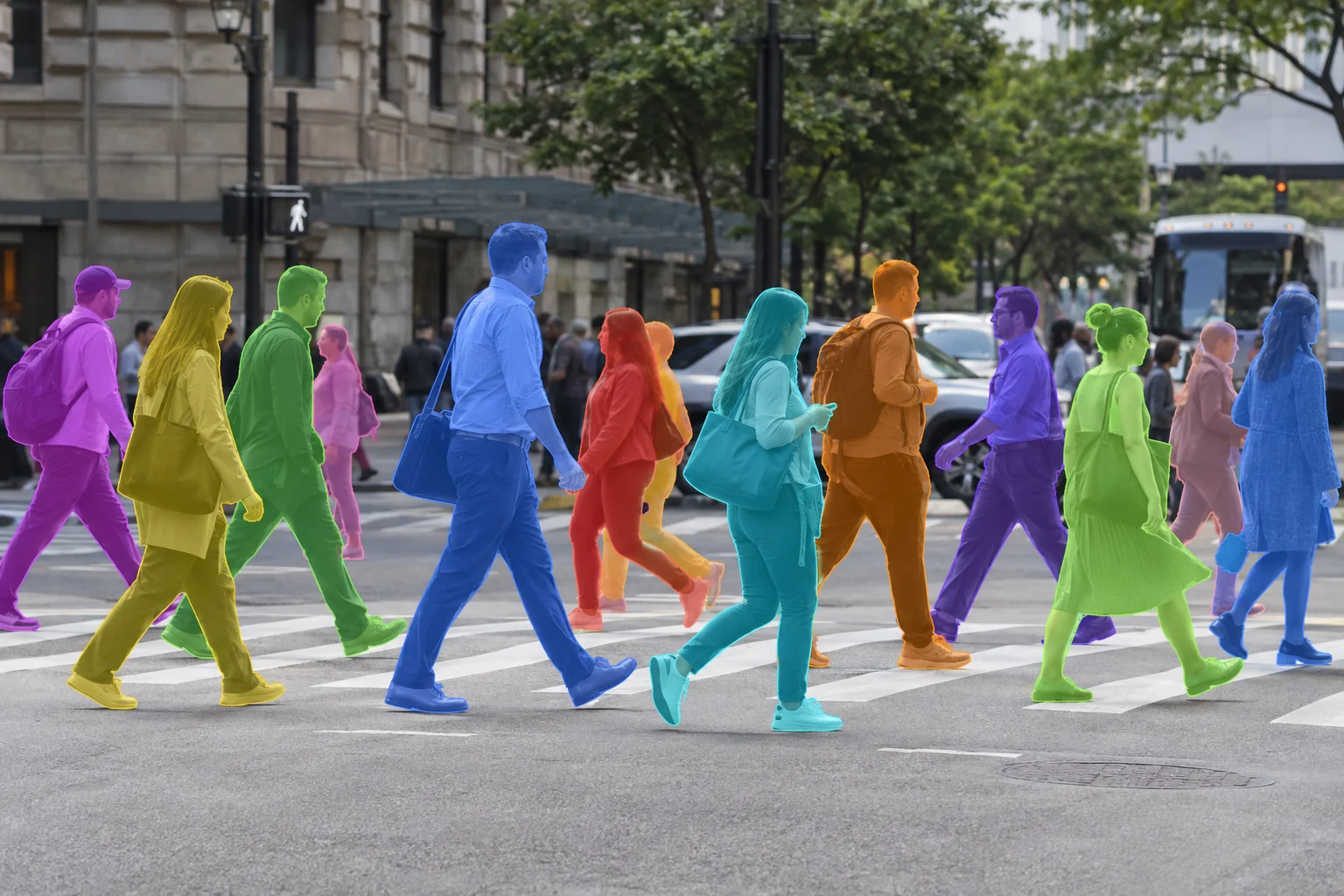
Pixel-tight boundary delineation assigning individual masks and unique instance IDs to distinct objects within the same class, accurately separating crowded, touching, or overlapping foreground entities.
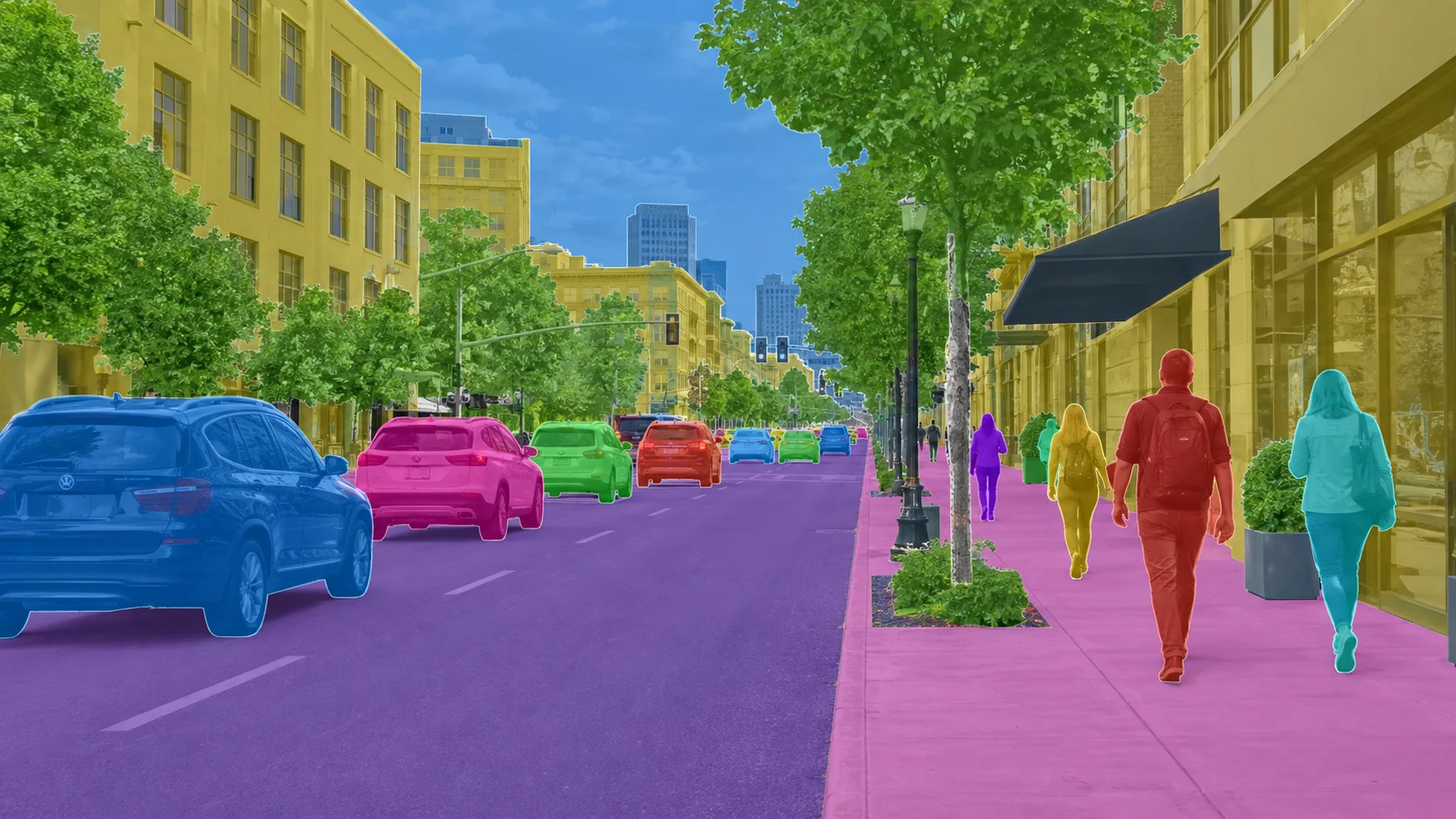
Unified spatial scene parsing combining continuous background semantic classification ("stuff") with individual object instance separation ("things") into a single cohesive pixel map.

Dual-layer boundary annotation predicting and delineating both the visible region and the occluded, full geometric extent of objects for autonomous driving depth reasoning and robotic grasp prediction.
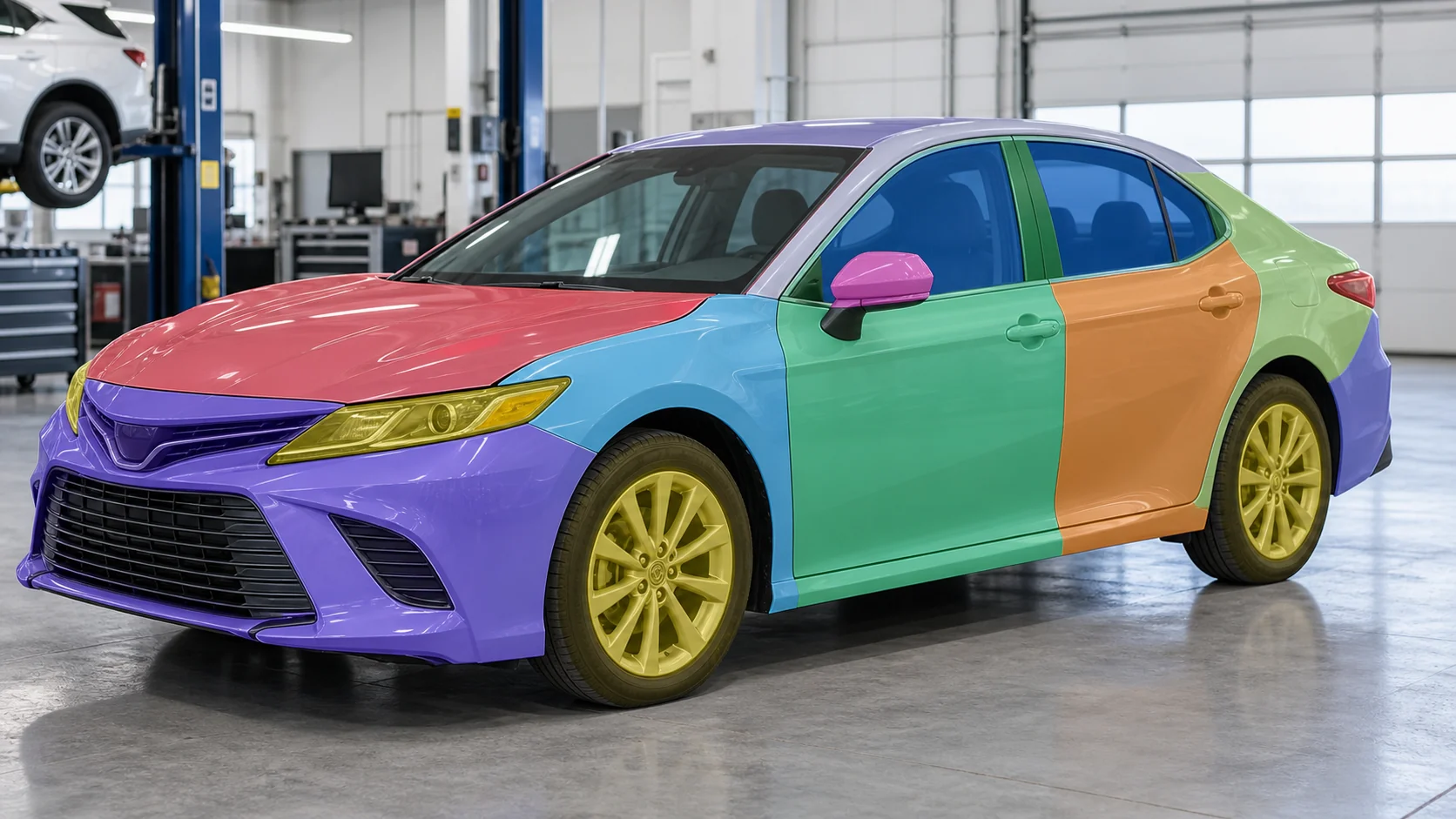
Hierarchical sub-component decomposition segmenting single entities into functional parts, including human apparel parsing, facial landmark zones, vehicle body panels, and robotic grasp surfaces.

High-vertex geometric vector polygon annotation for sharp, non-linear, and irregular object contours where bounding boxes or low-density polygons fail to provide required spatial precision.

Continuous fractional transparency masking down to individual pixels and fibers, isolating hair, fur, transparent glass, mesh fabrics, and motion-blurred edges for generative visual synthesis and VFX pipelines.

Pixel-level masking of structural flaws, micro-fractures, weld voids, surface abrasions, corrosion, and manufacturing anomalies on raw materials, semiconductor wafers, and fabricated components.
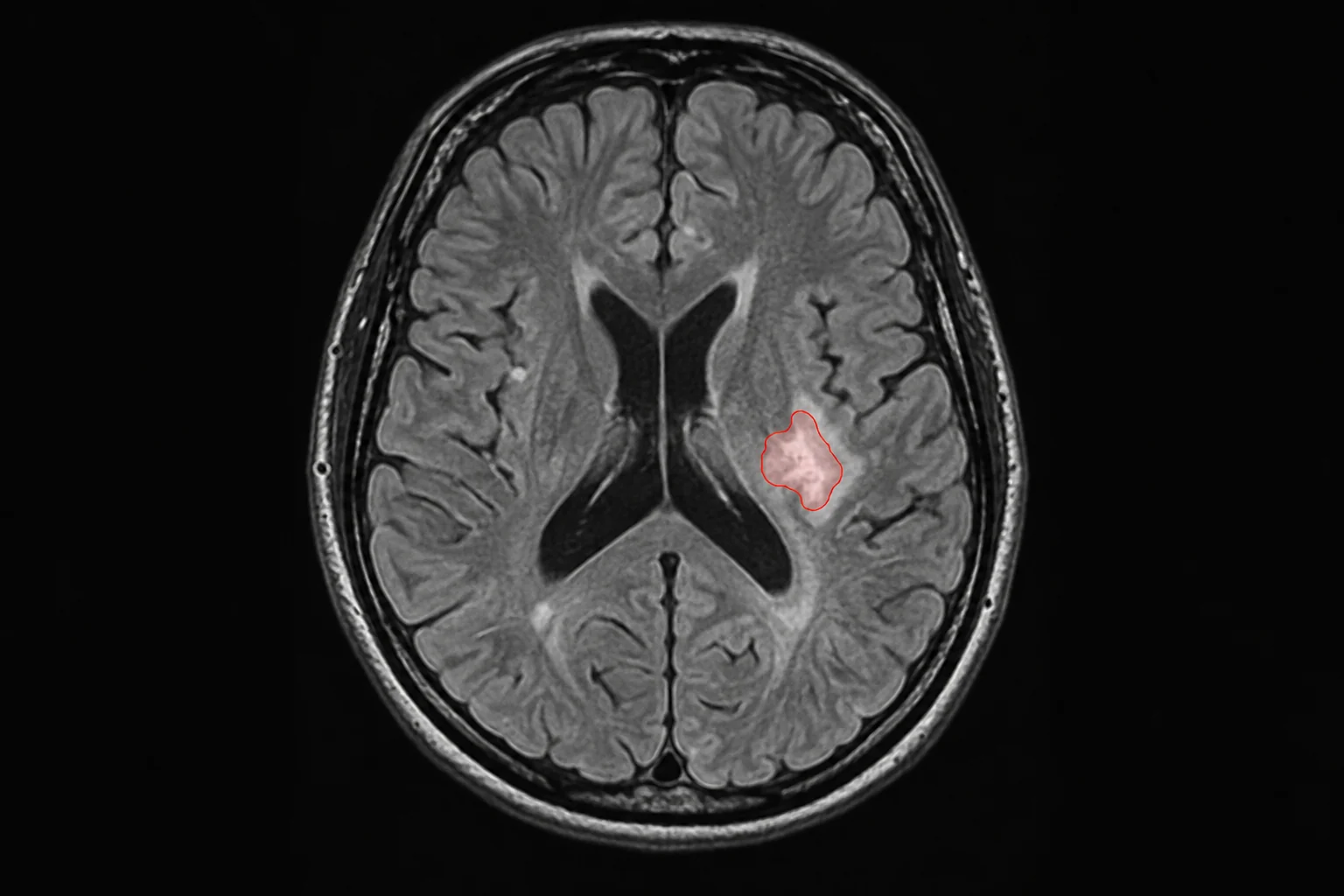
Specialist-led delineation of anatomical structures, lesions, tumor margins, bone contours, and cellular anomalies across clinical imaging modalities (DICOM, CT, MRI, and histology scans).
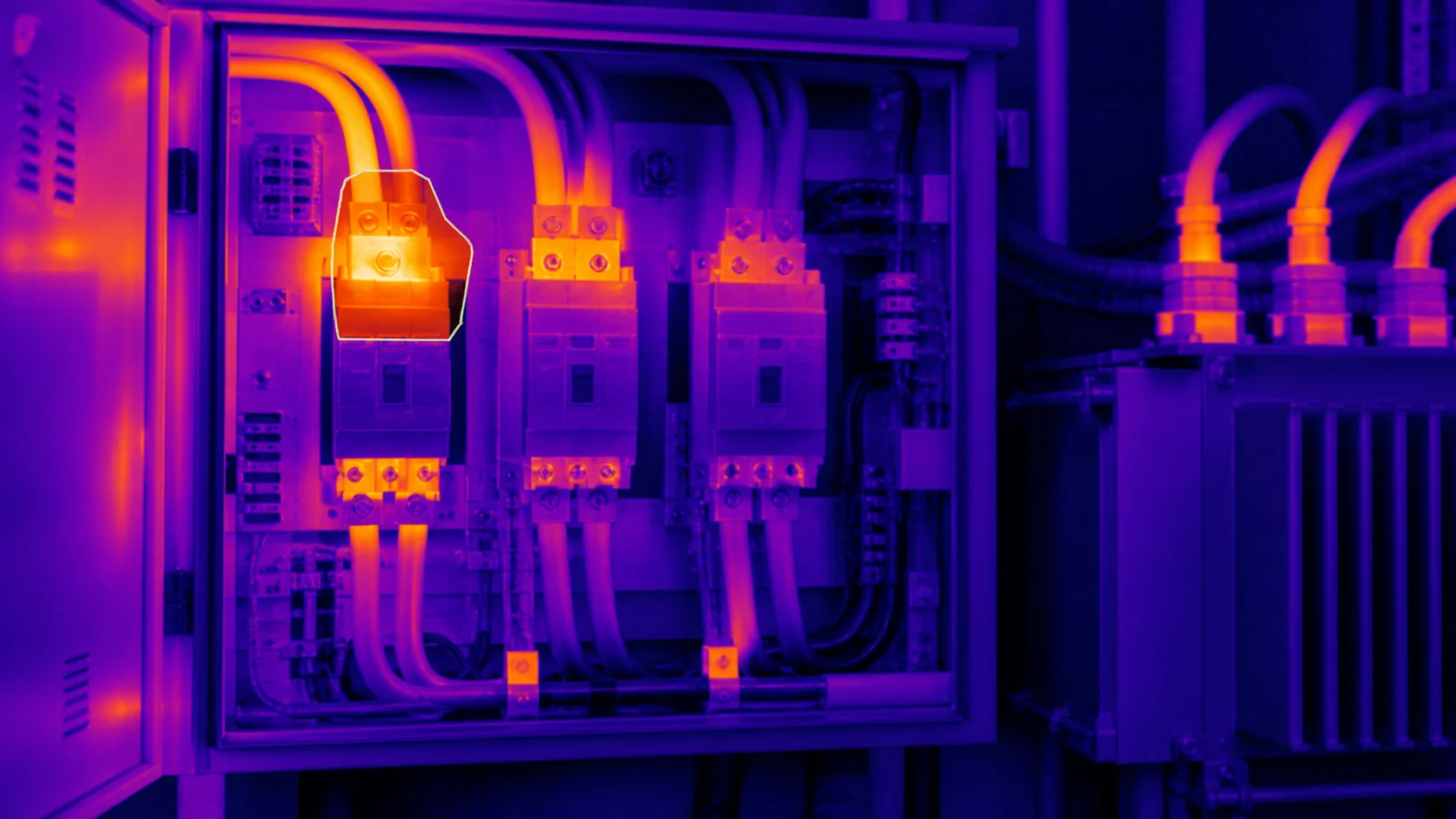
Segmentation across non-RGB radiometric imaging channels, isolating thermal signatures, surface heat anomalies, material properties, and environmental bands in FLIR, infrared, and multi-spectral datasets.
Our segmentation teams work directly inside your existing labeling environment, including CVAT, Label Studio, Kili Technology, Roboflow, SuperAnnotate, V7, or other client-approved platforms supporting polygon and mask workflows.
Annotators can operate inside client-owned segmentation interfaces through approved secure access, following your existing taxonomy, hotkeys, review stages, and mask-generation workflow without moving source data outside your environment.
When no production labeling environment is available, we configure isolated project workspaces around your segmentation taxonomy, annotation rules, permission model, and QA stages for pilot and scaled delivery.
Drivable-area segmentation, lane surfaces, sidewalks, vehicles, pedestrians, cyclists, traffic infrastructure, road hazards, and scene-level urban classes for perception models.
Precise masks for components, tools, workpieces, defects, graspable surfaces, production zones, and obstacles used in robotic perception and automated inspection systems.
Crop, weed, soil, vegetation, parcel, canopy, water, and land-cover segmentation across ground imagery, drone imagery, and remote-sensing datasets.
Detailed segmentation of anatomical structures, lesions, organs, tissue regions, cells, surgical objects, or other client-defined medical regions under controlled specialist-led annotation protocols.
Every annotator, QA reviewer, and project manager signs an NDA before accessing project assets.
Personnel are trained on data confidentiality: strict restrictions on screen sharing, zero tolerance for screen recording or screenshots, and supervised session management.
On-premise operations at our central Durgapur facility enforce controlled local networks, restricted USB and removable media ports, and supervised work environments.
Each client is assigned a dedicated team working in siloed environments, preventing cross-project data contamination and maintaining domain context.
Share a representative image set, taxonomy, and boundary guidelines with our delivery team. We will calibrate the annotation rules, complete a controlled pilot batch, review difficult edge cases, and return the sample for acceptance before production scaling.